
Could a chipped or gapped front tooth be improved without the extensive preparation often associated with traditional veneers? If you’re researching composite bonding for front teeth Maryville, you may be wondering about discomfort, cost, and whether the result will look natural. Bonding uses tooth-colored resin to reshape or repair visible teeth, often in a single visit.
Choosing cosmetic treatment starts with understanding what’s bothering you and what each option involves. This guide explains what composite bonding can address, how it compares with veneers, what to expect during treatment, and how to care for the result. Blue Ridge Family Dentistry provides cosmetic care for patients in Maryville and Alcoa, including dental veneers and teeth whitening. A dental exam can help determine whether bonding suits your teeth and goals.
Key Takeaways
-
Composite resin can repair or reshape front teeth, with the shade selected to complement your natural smile.
-
Front teeth call for attention to shade, translucency, and subtle contours to create a natural-looking result.
-
Bonding and porcelain veneers differ in tooth preparation, treatment steps, maintenance, and longevity.
-
Your dentist will discuss your goals, assess tooth health, and select a resin shade as part of treatment planning.
-
Blue Ridge Family Dentistry serves patients in Maryville and Alcoa and offers cosmetic care alongside exams and other dental services.
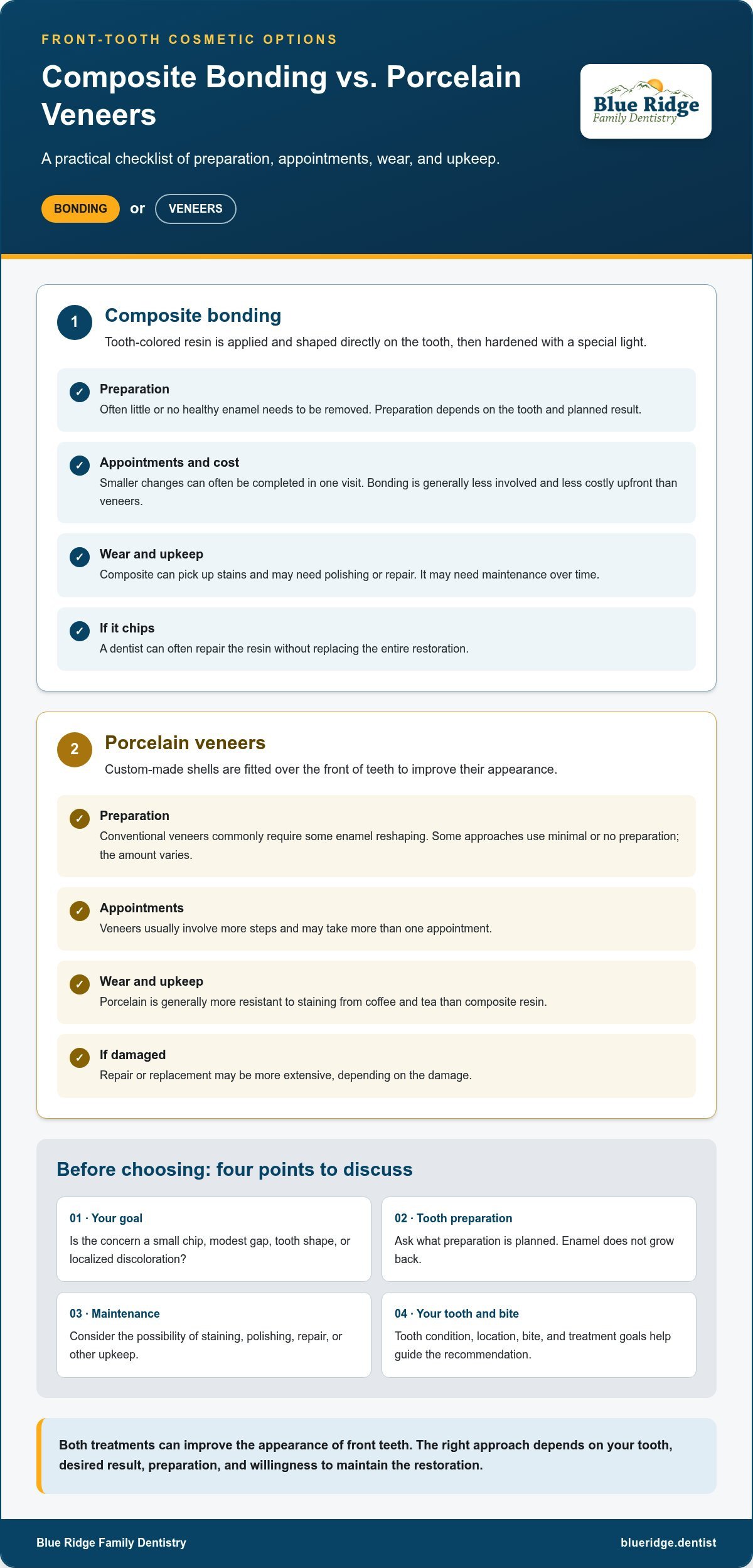
Table of Contents
What is Composite Bonding for Front Teeth?
Composite bonding uses tooth-colored resin to repair or reshape a tooth. The dentist applies the material to the tooth, shapes it, and hardens it with a special light. Careful contouring and shade selection can help bonding address chipped edges, small gaps called diastemas, and some localized discoloration.
Front teeth are highly visible when you speak and smile, so small differences in color, proportion, or contour can stand out. The goal is to blend the repair with nearby teeth rather than leave a noticeable patch. Dental bonding describes the broader procedure and its uses in dentistry.
Bonding is often considered conservative because it may require little or no removal of healthy enamel. The amount of preparation depends on the tooth and the planned result. Your dentist can assess the tooth and explain what preparation, if any, is needed.
The Versatility of Dental Bonding
Bonding can make small, visible changes while keeping your natural teeth at the center of the result. Depending on the tooth and your goals, it may be used to:
- Close a modest space between the upper front “social six” teeth by adding resin along the edges.
- Reshape a misshapen or peg-shaped tooth so it looks more balanced with neighboring teeth.
- Repair a minor fracture by rebuilding a chipped area.
Bonding may also mask certain areas of discoloration. A dental exam helps determine whether it is suitable for the cause and location of the color change.
Why Maryville Patients Choose Bonding Over Veneers
For a small chip or gap, composite bonding may be a simpler alternative to porcelain veneers. It can often be completed in one visit, although the appointment and treatment plan depend on how many teeth are involved and the work needed. Bonding is generally less involved and less costly upfront than veneers, but it may need maintenance over time.
Because bonding typically preserves more natural tooth structure, it may leave more options open for future dental care. It isn’t always fully reversible, particularly if a tooth needs preparation, so your dentist should explain the planned approach before treatment. Blue Ridge Family Dentistry provides cosmetic dental care for patients in Maryville, including treatment planning to help you compare available options.
The Art and Science of Cosmetic Resin
Composite resin does more than cover a flaw. Its color and light-reflecting qualities can be selected and shaped to complement the tooth, which matters on front teeth that show when you speak and smile. Careful sculpting helps the new contour follow neighboring teeth rather than look like an added patch.
The same tooth-colored material can serve different purposes. A restorative filling replaces tooth structure affected by decay or damage to support the tooth’s health and function. Cosmetic bonding focuses on appearance, such as adjusting a tooth’s shape or closing a small gap. The material may be similar, but the reason for treatment and the dental assessment guide the approach. The Cleveland Clinic describes bonding as a cosmetic procedure to enhance your smile and explains common uses.
Mimicking Natural Enamel
Natural enamel isn’t a flat, uniform color. It reflects light with subtle variation, so shade matching involves considering the surrounding teeth and how the resin will look in your smile. Layering shades or levels of translucency can create depth and a lifelike appearance. After shaping, the resin is polished to a smooth finish. These details help the bonded area blend in under everyday lighting.
The Bonding Mechanism
To help resin attach, the dentist may gently etch the tooth surface, creating microscopic texture for the bonding agent to grip. The adhesive connects the resin to the tooth, and a curing light hardens the material in place. Curing is the process of hardening resin with high-intensity light. The dentist then refines the shape and bite so the bonded area fits naturally with the rest of your teeth.
Composite materials are made to withstand ordinary biting and chewing, but bonding doesn’t last forever. The resin’s location, your bite, and daily habits can affect how it wears. Avoiding habits such as biting hard objects with your front teeth can help protect the finish. Routine dental visits also give your dentist a chance to monitor it.
Thoughtful material selection and careful shaping are central to composite bonding for front teeth Maryville. Blue Ridge Family Dentistry provides cosmetic dental care for patients in Maryville and Alcoa. Learn more about our Maryville dental care.
Composite Bonding vs. Porcelain Veneers: Which is Best?
Both composite bonding and porcelain veneers can improve the appearance of front teeth, but they suit different goals. Bonding is shaped directly onto the tooth, so smaller changes can often be completed in one visit. Veneers are custom-made shells fitted over the front of teeth, which usually involves more steps and may take more than one appointment.
Tooth preparation is another difference. Bonding often needs little or no enamel removal, while conventional veneers commonly require some enamel to be reshaped for a secure, natural fit. The amount varies by tooth and veneer approach; some options use minimal or no preparation. Since enamel doesn’t grow back, ask your dentist to explain what preparation a proposed treatment involves. The American Dental Association’s overview of resin-based composites offers background on materials used in direct restorations.
There are trade-offs in everyday wear, too. Porcelain is generally more resistant to staining from coffee and tea, while composite resin can pick up stains and may need polishing or repair. If bonding chips, a dentist can often repair the resin without replacing the entire restoration. A damaged veneer may require more extensive repair or replacement, depending on the damage.
When Bonding May Be a Good Fit
Bonding can be a conservative choice for minor changes, such as smoothing a small chip or adjusting the shape of one tooth, especially when preserving healthy tooth structure is a priority. It may also be an option to discuss if you want to make a limited change rather than a broader cosmetic one. Bonding isn’t automatically a “trial smile” before veneers; suitability depends on the teeth, bite, and treatment plan. Younger patients whose teeth are still shifting need an individualized assessment before cosmetic treatment.
Weighing the Initial Cost Against Long-Term Care
Bonding generally costs less upfront than porcelain veneers, but the overall value depends on the size of the correction, expected maintenance, and how long you hope the result will last. Veneers typically last longer, while bonding may need touch-ups or replacement sooner. Compare potential upkeep as well as the treatment fee when considering the options.
For a small imperfection, bonding may provide the change you want while keeping treatment focused and conservative. For broader changes or a longer-lasting finish, veneers may be worth discussing. The right choice depends on your dental health, aesthetic goals, and preference for maintenance. Read more about dental veneers in Maryville, TN to explore that option. Your dentist can help you compare the choices for your smile.
What to Expect: Your Bonding Appointment in Maryville
Knowing what happens at each stage can make a cosmetic dental visit feel more manageable. For composite bonding for front teeth Maryville, your appointment starts with a conversation about the changes you’d like to see. Your dentist examines your teeth and bite, checks the tooth’s health, and discusses whether bonding fits your goals.
If you decide to proceed, the tooth surface is cleaned and a resin shade is selected to complement your natural teeth. Your dentist applies the material and shapes it to create the intended contour and size. A special light hardens the resin, then the bonded area is smoothed and polished. Before you leave, your dentist checks how your teeth meet when you bite and makes adjustments as needed for a comfortable fit.
A Gentle, Patient-Centered Experience
Bonding often involves little or no removal of tooth structure, so local anesthetic may not be necessary. Whether it’s appropriate depends on the tooth and the treatment planned. If dental visits make you uneasy, tell your dentist. They can explain the steps and discuss what to expect during your appointment.
Maintaining Your New Smile
Care for bonded teeth as you do your natural teeth: brush twice daily with a soft-bristled toothbrush, floss gently each day, and keep up with professional cleanings and check-ups. These visits help your dentist monitor the bonding and remove surface buildup. Coffee, tea, and tobacco can contribute to staining, so limiting exposure can help maintain the resin’s appearance. Avoid biting hard objects with bonded front teeth, and mention any rough edges or chips at your next dental visit.
Schedule Now## Why Choose Blue Ridge Family Dentistry for Your Smile?
Cosmetic dentistry is personal. A small change to a front tooth can affect how your whole smile looks, so treatment planning should account for dental health as well as the appearance you hope to achieve. Blue Ridge Family Dentistry provides dental care for patients in Maryville and Alcoa, including exams, cleanings, and cosmetic services.
Our team includes four dentists. When a concern involves several teeth or bonding needs to be considered alongside other cosmetic options, your dentist can discuss the treatment plan and relevant alternatives. The aim is to recommend an approach suited to your needs rather than assume the same treatment fits every smile.
As a private practice, Blue Ridge Family Dentistry provides care for individuals and families. Discussing your priorities and understanding the options can help you make an informed decision about cosmetic treatment and your oral health. For composite bonding for front teeth Maryville, both careful planning and attention to your goals matter.
Personalized Cosmetic Planning
Your treatment plan should reflect your priorities, dental health, and budget. You can discuss what you’d like to change, whether that’s a chipped edge, uneven shape, or small gap. Your dentist can explain how bonding compares with veneers and what each option may involve, so you can make an informed choice. Learn more about our approach to cosmetic dental care.
Care Close to Home in Maryville and Alcoa
Blue Ridge Family Dentistry serves patients in Maryville and Alcoa. A first visit is an opportunity to share your concerns, ask questions, and understand possible next steps. If dental treatment makes you anxious, let your dentist know so they can explain the process and help you understand what to expect.
Blue Ridge Family Dentistry welcomes patients from the Maryville and Alcoa communities for preventive, restorative, and cosmetic dental care.
Take the Next Step Toward a Smile You Feel Good About
Composite bonding can be a conservative way to refine front teeth, often with less preparation than traditional veneers. Careful shade selection and shaping help the resin blend with your smile, while a dental exam helps determine whether bonding fits your needs and goals.
Exploring composite bonding for front teeth Maryville starts with considering what you want to change and discussing the options. Blue Ridge Family Dentistry is a private practice with a team of four dentists, serving patients in Maryville and Alcoa with preventive, restorative, and cosmetic care.
Every smile is different. A conversation with your dentist can help you understand your options and choose a path that supports your dental health and the changes you hope to see.
Schedule NowReady to discuss your smile goals? Schedule a visit with Blue Ridge Family Dentistry.
Frequently Asked Questions
How much does composite bonding for front teeth cost in Maryville?
The cost depends on how many teeth need bonding and the amount of reshaping or repair involved. A small chip may require less work than changing the shape of several front teeth. Blue Ridge Family Dentistry can discuss the treatment plan and cost after examining your teeth and understanding your goals. If you’re considering composite bonding for front teeth in Maryville or Alcoa, an exam can help clarify the options for your smile.
Does dental bonding hurt or require needles?
Bonding is often comfortable and may not require anesthetic because it usually involves little or no removal of tooth structure. Whether numbing is appropriate depends on the tooth and the work needed. If you’re anxious about dental treatment, tell your dentist so they can explain each step and what to expect.
How long does composite bonding last on front teeth?
Composite bonding can last for years, but its lifespan varies with the tooth’s location, your bite, and habits such as biting hard objects. Bonding on an edge that meets another tooth may experience more wear than resin on a less exposed surface. Brushing and flossing, avoiding using teeth as tools, and keeping regular dental visits can help protect the restoration. Your dentist can monitor it during check-ups.
Can bonded teeth be whitened later?
Whitening treatments don’t change the color of composite resin, so bonded areas may not lighten along with natural teeth. If you’re considering whitening, discuss the order of treatment with your dentist. Whitening natural teeth first can help guide the shade chosen for new bonding. If you already have bonding, your dentist can review how its color compares with your teeth and explain options for improving the overall match.
What happens if my composite bonding chips or breaks?
If bonding chips, arrange a dental assessment so the area can be checked and repair options discussed. Small chips can sometimes be smoothed or repaired with additional composite resin, while more extensive damage may need a different approach. Until it’s assessed, avoid biting hard foods or objects with that tooth. If the tooth itself hurts or feels unusually sensitive, mention that when arranging your visit.
Is composite bonding better than veneers for a gap between teeth?
Neither option is best for every gap. Bonding may suit a small space when you want a conservative change, while veneers may be considered for broader cosmetic changes or when altering several teeth. Your dentist will assess the gap, tooth proportions, bite, and oral health before recommending an approach. Blue Ridge Family Dentistry serves patients in Maryville and Alcoa and can help you compare bonding and veneers based on your goals and the condition of your teeth.
How long does the bonding procedure take?
Many bonding treatments are completed in one appointment, but the time depends on how many teeth are being treated and how much shaping is needed. A single small repair is different from bonding several front teeth for a more even appearance. Your visit may include an assessment, shade selection, application, shaping, polishing, and a bite check. Your dentist can explain the expected steps for your treatment plan.
Will insurance cover composite bonding for my front teeth?
Coverage depends on your dental plan and the reason for treatment. Bonding used to restore a tooth damaged by decay or injury may be considered differently from bonding done only to change appearance, such as closing a gap. Before treatment, review your benefits with your insurance provider and ask about coverage using the procedure codes supplied by your dental office. Your plan documents explain exclusions, limits, and any required patient share.