
What if food repeatedly catching around one crowned tooth is a clue, not just an annoyance? If you’re searching for “food stuck under dental crown,” you may be wondering whether the crown has shifted or whether cleaning the area could cause damage. It’s understandable to feel concerned, especially when food keeps catching in the same spot. Occasional food trapping can happen, but a recurring problem deserves attention rather than guesswork.
This guide covers common reasons food gets trapped, including changes in the crown’s fit, a space between neighboring teeth, or gum recession. You’ll learn gentle ways to clear food at home, what to avoid, and which symptoms, such as pain, swelling, bleeding, or a lingering bad taste, warrant a dental evaluation. A dentist can assess the crown, nearby teeth, and gums to help identify what may be causing the problem and what care may be appropriate.
Key Takeaways
-
Food described as stuck “under” a crown may actually be caught beside it or along the gumline. That sensation alone doesn’t identify the cause.
-
If food stuck under dental crown keeps returning in the same spot, note the pattern instead of assuming the crown is loose or damaged.
-
To clear food gently, rinse and brush carefully, then guide floss without snapping it into your gums. Use an interdental brush only if it fits comfortably.
-
Repeated trapping is worth assessing, even without pain. New bleeding, swelling, or discomfort are also reasons to pay attention.
-
A dental exam can check the crown, nearby teeth, bite, and gums to help identify possible contributing factors.
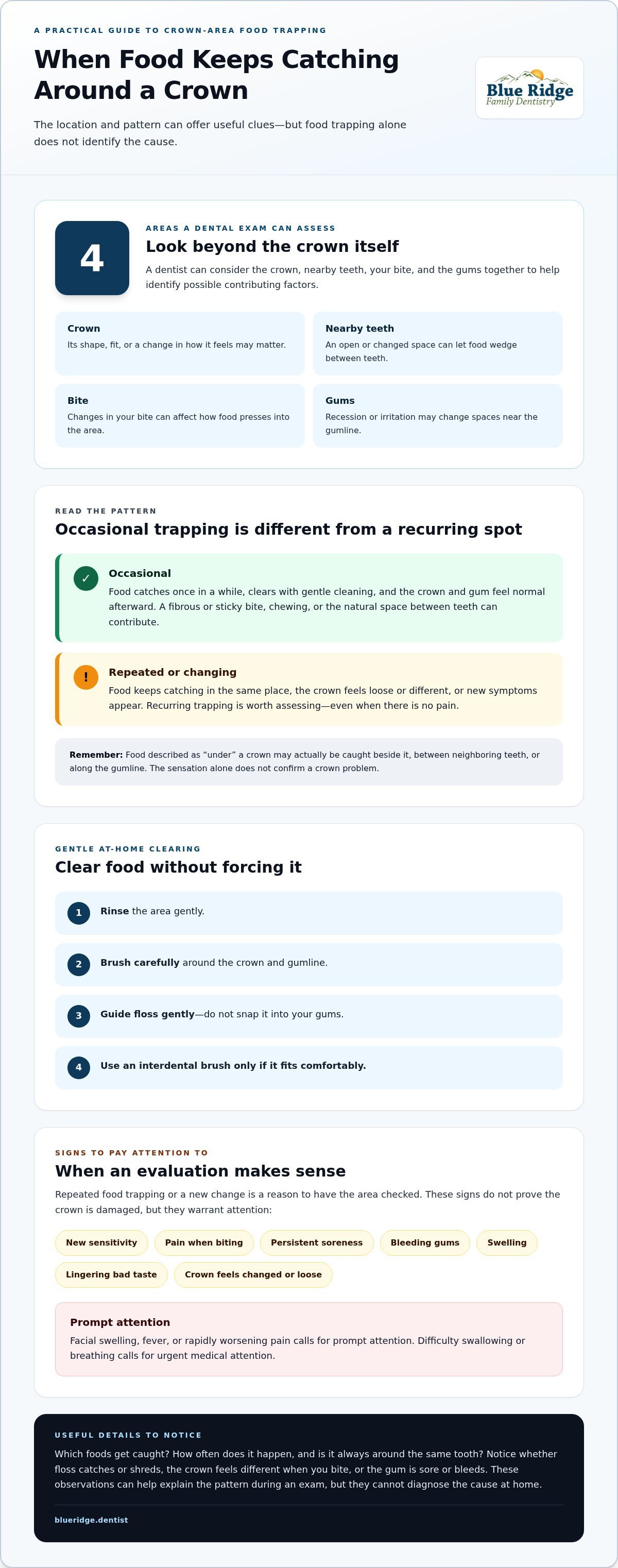
Table of Contents
-
Occasional Food Trapping or a Crown Problem: How to Tell the Difference
Food Stuck Under a Dental Crown: What It Can Mean
Food caught near a crown can have several explanations, and the sensation alone doesn’t tell you whether something is wrong. People often say food is “under” a crown when it’s actually wedged beside the crown, between neighboring teeth, or along the gumline. A dental crown covers a tooth, but food can still catch around its edges or in nearby spaces.
An occasional piece of food that clears gently is different from food repeatedly catching in the same spot. Recurring trapping is worth paying attention to, even if it doesn’t hurt. Food that remains around the teeth and gums can be difficult to clean and may contribute to irritation. It doesn’t automatically mean the crown has failed, but noticing when and where it happens can help a dentist assess the crown and surrounding area.
Is food trapping around a crown ever temporary?
Yes. A fibrous or sticky bite, the way you chew, or the natural space between teeth can cause food to catch once in a while. If it comes away with gentle cleaning and the area feels normal afterward, an isolated episode may not point to a crown problem. Note whether it starts happening repeatedly in the same place, and arrange an assessment rather than assuming the recurring problem is harmless.
What details should you notice?
A few simple observations can give your dentist useful context. Notice which foods tend to get caught, how often it happens, and whether it’s always around the same tooth. Pay attention to whether floss catches or shreds, the crown feels different when you bite, or the gum is sore or bleeds.
These details can’t diagnose the cause at home, but they can help you explain what you’re experiencing during an exam. Mention a change in how the crown feels or gums that are repeatedly sore or bleeding, even if food trapping is your main concern.
Why Food May Keep Getting Caught Around a Dental Crown
Food catching in the same area doesn’t point to one definite cause. The space between neighboring teeth, the crown’s shape, and changes in the gums can all affect how food moves as you chew. A crown may still be secure and intact, so food trapping alone doesn’t prove it is damaged or poorly fitted. A dentist can assess the tooth and surrounding tissues to help identify what might be contributing.
Recurring food trapping can have tooth-, crown-, or gum-related causes. The pattern is a reason to look more closely, not a diagnosis by itself.
Could the crown’s fit or the space between teeth be involved?
A crown’s contour and how it meets the neighboring tooth help shape the space where food passes. If that contact is more open than it should be, or the space has changed, food may wedge between the teeth as you chew. Changes in your bite can also affect how food presses into the area. These possibilities don’t confirm a crown problem, but a crown that feels loose or different should be professionally assessed.
For general guidance on proper care for your dental crown, see Cleveland Clinic’s overview of crowns and their care.
Can gum changes or decay contribute?
Gum recession can expose more of a tooth’s surface and change the shape of spaces near the gumline. That may create a spot where food collects, even if the crown itself hasn’t shifted. The gum tissue may also become tender or bleed if it’s irritated. These changes can offer clues, but symptoms alone can’t reveal the exact cause.
Food catching near a crown doesn’t confirm decay at its edge. During an exam, a dentist can evaluate the crown, the underlying tooth, nearby teeth, and gum tissue together. If you’re concerned about recurring food stuck under dental crown, an evaluation at Blue Ridge Family Dentistry can help identify possible contributing factors.
Occasional Food Trapping or a Crown Problem: How to Tell the Difference
A single piece of food that clears with gentle cleaning and leaves the area feeling normal is different from food that repeatedly catches in the same place. A pattern, a change in how the crown feels, or new symptoms can make a dental assessment sensible. Pain isn’t the only reason to have it checked. Crown concerns can show up in different ways, and one symptom alone can’t reveal the cause. WebMD describes several problems that could develop with a dental crown, but an evaluation is needed to assess what’s happening in your mouth.
| Occasional trapping | Repeated trapping or new symptoms |
|---|---|
| Food catches once in a while and clears gently. The crown and surrounding gum feel normal afterward. | Food keeps catching in the same spot, or the crown feels loose or different. The area may also be persistently sore, swollen, or bleeding. |
| No ongoing discomfort or other noticeable changes. | You may notice new sensitivity, pain when biting, or a persistent bad taste. |
Which symptoms make a dental appointment sensible?
Arrange a dental evaluation if food repeatedly gets trapped around the same crown, even if there’s no pain. Also pay attention to new sensitivity, discomfort when chewing, persistent soreness, bleeding gums, swelling, a lingering bad taste, or a crown that feels changed or loose. These signs don’t prove the crown is damaged, but they are reasons to examine the crown, nearby teeth, and gum tissue.
If you’re noticing food stuck under dental crown along with any of these changes, note how often it happens and what feels different. Those details can help guide the assessment.
When should symptoms be treated as urgent?
Facial swelling, fever, or rapidly worsening pain calls for prompt attention. If you have difficulty swallowing or breathing, seek urgent medical attention. Don’t wait for a routine dental appointment if breathing or swallowing is difficult. These symptoms need timely care, though they don’t identify the underlying cause on their own.
How to Safely Remove Food Stuck Near a Dental Crown
If you have food stuck under dental crown, take a gentle approach. The goal is to clear debris without pushing it farther into the gumline or putting pressure on the crown. Don’t use sharp tools or force anything into a tight space.
- Rinse gently. Swish with plain water to loosen food around the crown and gumline, then spit it out.
- Brush carefully. Use a soft toothbrush to clean the crown and nearby teeth with light strokes. Avoid scrubbing sore gums.
- Try floss gently. Slide floss between the teeth without snapping it down into the gums. Ease it around the tooth, then carefully guide it back out.
If floss shreds, repeatedly catches, or causes pain or bleeding, stop rather than pulling harder. An interdental brush may help with an accessible space, but use it only if it fits comfortably and moves without force. Don’t push a brush into a gap that feels too tight. Gentle cleaning should not require prying or pressure.
What should you avoid if the crown feels loose?
Avoid pins, sharp tools, and forceful toothpick use. Don’t pull, pry, tighten, or try to glue a crown back in place at home. These actions can injure the gum or affect the crown and tooth. If the crown feels loose or painful, avoid chewing hard, crunchy, or sticky foods on that side and contact a dentist for guidance.
If the crown comes off, don’t use household glue or force it back into place. Contact a dentist for advice about what to do next, especially if pain develops. Repeatedly testing or moving a loose-feeling crown can make the area more uncomfortable.
Once the area is clean, notice whether the problem returns. Safe home cleaning can remove debris, but it can’t determine why food keeps catching. If you’re unsure how to clean around a crown or the same spot keeps trapping food, a dental evaluation can assess the crown and nearby gums.
Blue Ridge Family Dentistry provides dental exams and restorative care, including crowns. Learn more about dental exams and crown care.
When to Have a Dentist Check Food Stuck Under a Crown
If food repeatedly catches around the same crown, a dental evaluation can help identify what’s contributing instead of leaving you to guess at home. An exam can assess the crown, nearby teeth, how your bite comes together, and the surrounding gum tissue. Repeated trapping doesn’t automatically mean the crown has failed, but it’s worth discussing, even if you aren’t in pain.
What may happen during a crown evaluation?
Your dentist may ask when the trapping began, how often it happens, which foods trigger it, and whether you’ve noticed pain or a change in how the crown feels. The dentist can inspect the crown’s shape and edges, the contact between neighboring teeth, the tooth beneath it, and the gums. If clinically appropriate, digital X-rays may help assess areas that aren’t visible during the exam. Imaging depends on your situation and isn’t a guaranteed step or result.
You can read about dental exams and crown care to learn more about what an evaluation may involve. An exam helps your dentist understand the concern and discuss a suitable next step based on the findings.
What information should you bring to the appointment?
A few notes can make it easier to explain what’s been happening. Consider keeping track of:
- When the food trapping started and how often it occurs
- Which foods tend to get caught and whether it’s always in the same spot
- Any crown looseness or change in how it feels when you bite
- Sensitivity, soreness, bleeding, swelling, or pain on biting
You don’t need to figure out the cause before your visit. Sharing what you’ve noticed gives the dentist helpful context, while the exam helps determine what care, if any, may be appropriate.
If you’re in Maryville or Alcoa and food keeps catching around a crown, schedule an evaluation with Blue Ridge Family Dentistry. A closer look at the crown and surrounding tissues can help clarify what may be going on and guide the next step.
Take the Next Step Toward a Comfortable Crown
Food stuck under dental crown can have several possible explanations, and a single episode doesn’t automatically mean the crown is damaged. Gentle rinsing, brushing, and careful flossing may help clear food, but repeated trapping or changes such as soreness, bleeding, sensitivity, or a loose-feeling crown deserve attention. Avoid sharp tools and don’t try to adjust the crown yourself.
A dental evaluation can help identify what’s contributing by assessing the crown, nearby teeth, bite, and gums. Blue Ridge Family Dentistry provides crowns and restorative care, along with dental exams and digital X-rays when appropriate. If food keeps catching in the same place, an exam can help clarify a suitable next step.
Schedule NowYou don’t have to figure it out on your own. A careful assessment can help you move forward with greater confidence and comfort.
Frequently Asked Questions
Can food get stuck under a dental crown?
Yes, though food described as stuck “under” a crown is often caught beside it, between neighboring teeth, or near the gumline. An occasional piece may lodge there and clear with gentle cleaning. If food repeatedly catches in the same spot, the space between teeth, the crown’s contour, or gum changes could be contributing. The sensation alone can’t identify the cause, so a dentist can assess the area.
Why does food keep getting stuck around my crown?
Recurring food trapping can have several possible explanations, including a changed contact between neighboring teeth, the crown’s shape or fit, or changes in the surrounding gums. The symptom alone doesn’t show which explanation applies or prove the crown is damaged. Notice which foods trigger it and whether you also have pain, bleeding, sensitivity, or a loose feeling. Sharing those observations with your dentist can help guide an evaluation.
Is food stuck under a crown a dental emergency?
Food trapping by itself isn’t always an emergency, particularly if it clears gently and you have no other symptoms. Arrange a dental evaluation if it keeps happening, the crown feels loose, or discomfort persists. Facial swelling, fever, or rapidly worsening pain calls for prompt care. Difficulty breathing or swallowing requires urgent medical attention. If you’re in Maryville or Alcoa, a dental exam can help assess recurring crown concerns.
How do I remove food stuck near a dental crown safely?
Start by rinsing gently with water, then brush the crown and nearby teeth with a soft toothbrush. If you floss, slide it between the teeth carefully without snapping it into your gums, then ease it out. Don’t use pins, sharp tools, or force. Stop if the area hurts or bleeds, or if floss repeatedly catches. If the problem continues, contact a dentist for guidance instead of trying to dig food out.
Can flossing loosen or damage a dental crown?
Careful flossing is different from pulling forcefully against a crown, and floss shouldn’t be snapped into the gums. Guide it gently between the teeth and ease it out rather than tugging. If it repeatedly catches or shreds, stop and mention that during a dental evaluation. Don’t pry at the crown. If it moves, feels loose, or becomes painful, avoid chewing on that side and contact a dentist for advice.
What happens if food keeps getting stuck under my crown?
A dentist can ask when the problem started and examine the crown, neighboring teeth, bite, and gums. The evaluation may help determine whether tooth contact, crown shape, gum changes, or another factor could be involved. Food trapping doesn’t automatically mean the crown needs replacement. For patients in Maryville and Alcoa, an exam can clarify what may be contributing and whether a next step or treatment is appropriate.